So you want to use AI to help with your marketing. Great. Before you open ChatGPT, Claude, or whatever platform you've decided to try, I have a question:
Do you know what your brand sounds like?
Not in your head. Not "we're professional but approachable" or "authentic and mission-driven" or whatever vague aspirational nonsense lives in the back of your brain.
I mean: do you have it written down? Can you point to a document and say "this is our voice, these are our messages, this is our strategy"?
Because if you can't, AI isn't going to help you. It's going to make your existing lack of clarity faster and louder.
The uncomfortable truth about AI and strategy
AI is very good at execution. It's very bad at strategy.
If you know what you want to say, how you want to say it, and who you're saying it to, AI can help you say it faster, more consistently, and with less cognitive load.
If you don't know those things, AI will just generate a lot of words that sound fine and mean nothing.
Here's what I see all the time: someone sits down with whatever AI tool they've chosen, types "write a marketing email about our services," gets back three paragraphs of generic professional-speak, and then blames the AI for not understanding their brand.
But the AI didn't fail. You failed to tell it what your brand is.
And if you can't tell the AI what your brand is, it's because you don't actually know.
The three documents that fix this
Before you use AI for anything that matters—before you generate marketing content, write thought leadership, draft donor communications, any of it—you need three things written down:
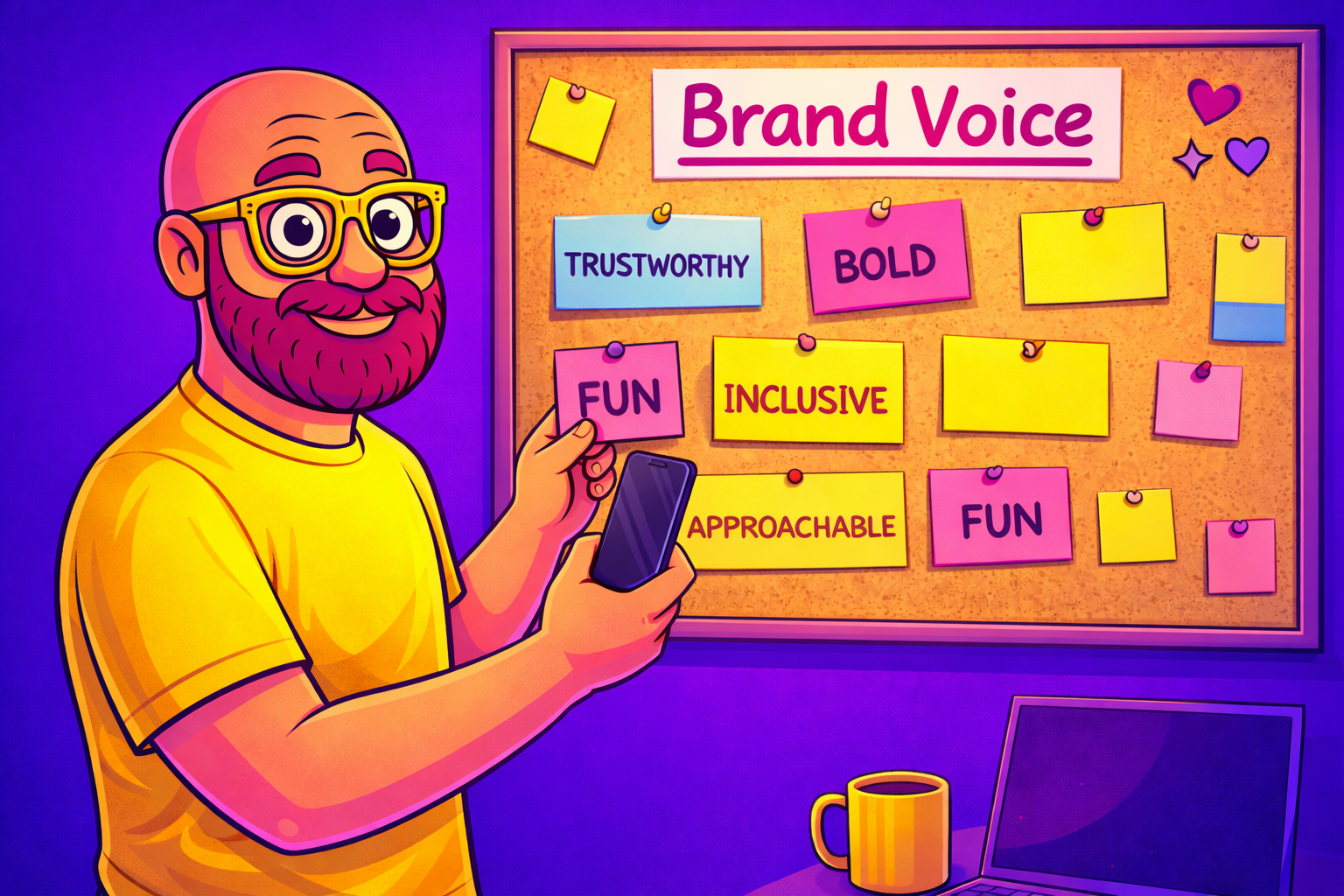
1. A brand voice guide
Not "we're warm and professional." That's not a voice. That's two adjectives having a fight.
A real voice guide tells you:
- What you sound like (with examples)
- What you don't sound like (with counter-examples)
- Specific word choices you use and avoid
- Sentence structure preferences
- Tone across different contexts (social media vs. annual report vs. donor email)
Example: "We're conversational but not casual. We use contractions and short sentences. We avoid jargon like 'impact' and 'stakeholder.' We're direct, not diplomatic. We sound like a smart person explaining something clearly, not like a TED talk."
See the difference? That's something you can actually use. That's something an AI can learn from.
If you don't have this, create it. Look at your best marketing pieces, the ones that feel most "you," and reverse-engineer what makes them work. Write it down. Make it specific.
2. Your key messages and positioning
What are you actually trying to communicate about your organization? Not your mission statement (though that's useful). Your positioning.
What do you do? Who do you do it for? Why does it matter? What makes you different?
And then: what are the three to five key messages you want people to remember about you?
These aren't slogans. They're the ideas that should show up consistently across everything you create. The throughlines.
Example:
- We make AI accessible for small organizations without in-house expertise
- Strategy comes first; tools come second
- Authenticity isn't optional, even when you're using automation
- Good AI use makes your work easier and more human, not less
If you can't articulate this, your content is going to wander. And AI-generated content that wanders is just wandering faster.
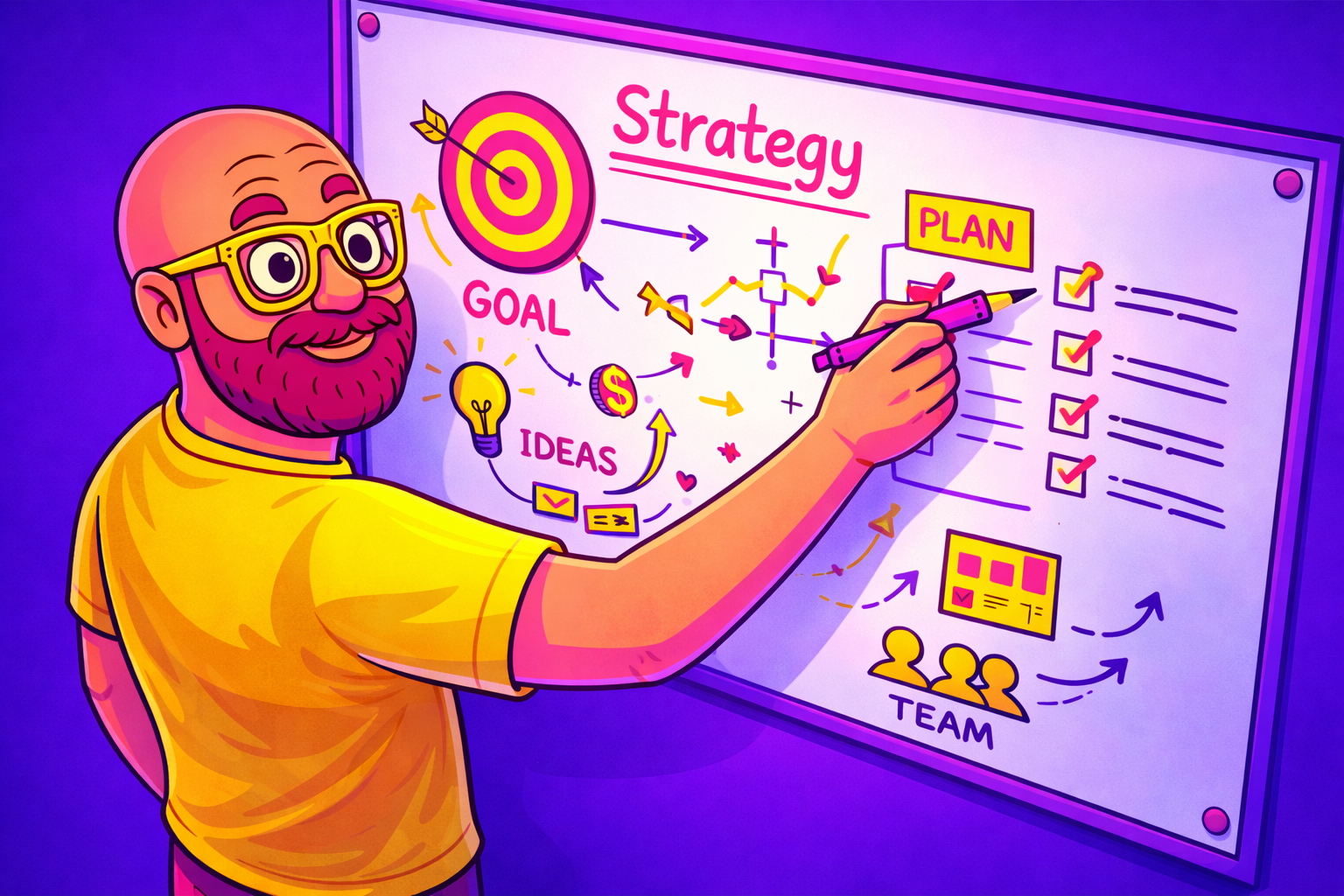
3. Your actual strategy for the thing you're creating
Okay, you've got your voice and your positioning. Now: what are you trying to accomplish with this specific piece of content?
Before you prompt the AI, you need to know:
- Who is this for? (Specific audience, not "everyone")
- What do you want them to do or feel? (Specific outcome, not "be aware")
- What's the core message? (One idea, not five)
- What context do they need? (What do they already know? What do they care about?)
This is where most people skip ahead and start prompting. Don't.
If you can't answer these questions clearly, you don't have a strategy. You have a vibe. And AI is very good at generating vibes that sound like strategy but fall apart the second someone asks "okay, but what are we actually trying to accomplish here?"
Why this feels like extra work
I know. You wanted to just use AI and have it make things easier. And now I'm telling you to write three documents first.
But here's the thing: you should have these documents anyway. Voice guide, positioning, strategy—these aren't AI prerequisites. These are basic marketing fundamentals.
If you don't have them, you're not actually ready to market your business. You're just throwing content into the void and hoping something sticks.
AI doesn't change that. It just makes the throwing faster.
What happens when you skip this step
You get content that sounds fine and does nothing.
You get emails that could be from anyone. Social posts that don't sound like you. Thought leadership that's indistinguishable from everyone else's thought leadership.
You get the AI equivalent of stock photography: technically competent, professionally generic, utterly forgettable.
And then you blame the AI. "It doesn't understand our brand. It can't capture our voice. It's too robotic."
No. It's doing exactly what you asked it to do, which is generate content without strategy, voice, or purpose.
The good news
Once you have these three documents, AI becomes genuinely useful—regardless of which platform you're using.
You can feed them to a custom GPT in ChatGPT and train it to write in your voice. You can upload them as context in Claude and reference them in every conversation. You can use them in prompts to keep content on-message across any platform. You can use them as quality control: does this AI-generated draft align with our voice, hit our key messages, and serve our strategy?
If yes, edit and use it. If no, adjust the prompt and try again.
But you have to have the documents first.
You have to know what you're trying to say before you can ask AI to help you say it.
What's next:
Next week, we're talking about why your AI-generated content feels hollow—and what you're leaving out that makes all the difference.